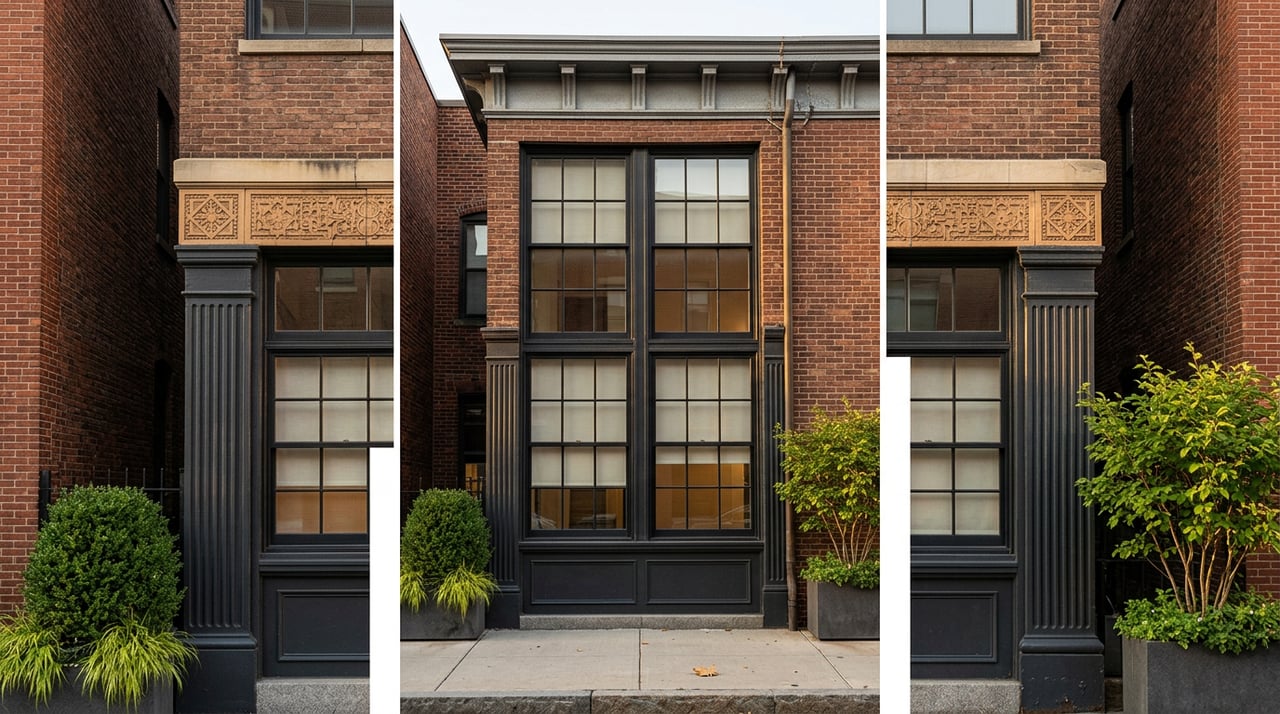
Walk east from Printer's Row Park on a Thursday evening and the neighborhood tells you two different stories inside of six blocks. Dearborn Street has been quietly filling in with the kind of places that expect you to become a regular. S. Wabash is doing the opposite, staking a claim on reservations, name-recognition chefs, and rooms designed to be photographed.
If you already live here, the summer 2026 openings are worth reading as a pattern rather than a list. The two spines of the neighborhood are diverging on purpose, and knowing which is which changes how you plan a weeknight, a Saturday morning, or a summer weekend when a friend visits from out of town.
Dearborn is going low-key on purpose
The Printer's Row side of the neighborhood has spent forty years building around a small set of anchors. Sandmeyer's Bookstore has operated from the same storefront since 1982, a bar has run continuously at 701 South Dearborn since the 1880s (Kasey's Tavern has held the name since 1974), and the Jazz Showcase, founded in 1947 by NEA Jazz Master Joe Segal, relocated adjacent to Dearborn Station in 2008. That gravity is why the new arrivals on Dearborn read the way they do.
Vitalogy is the clearest example. Jennifer Wilson and James Shields transformed the ground floor of a 142-year-old building in Printer's Row into a neighborhood bar with a long wooden bar, reclaimed fixtures, a hydroponic herb garden, global beers, and Chicago-inspired cocktails including a "Second City Milk Punch" with Malört, and they've talked about the room as a community hub with happy hour deals, cocktail classes, and live music. Nothing about the pitch is aimed at a downtown crowd looking for a night out. It is aimed at people who live within a ten-minute walk.
Forno Mauri, the Italian pizzeria that opened on the same stretch, fits the same template. Cafe Deko, a second location of the Diversey coffee shop, is landing here for similar reasons: a design-forward daytime spot with croissants and small sandwiches, rather than a full-service restaurant with a marketing budget. The Printers Row Wine Shop at 719 S. Dearborn, a fixture since 2004, still anchors the wine-and-happy-hour end of the block.
The through line is scale. Dearborn wants places you can duck into on a Tuesday without a reservation. That has consequences for how the street feels at 9 p.m., and it explains why a bigger, louder concept on the same block has run into so much friction from neighbors this year.
Wabash is playing a different game
Two blocks east, S. Wabash is picking up destination projects with names attached. The iconic South Loop watering hole Martini Lounge reopened in June under new leadership from Pangea Restaurant Group, with former Bears player and restaurateur Israel Idonije guiding the next chapter at 1520 S. Wabash Ave. The pedigree matters here in a way it doesn't on Dearborn. This is a room built to draw people from outside the neighborhood.
Southern Chicago, further up Wabash, has been running the same play at brunch. Led by executive chef Xavier Vance and Troy Vivrett, the restaurant reimagines contemporary Southern American cuisine with bold flavors inside a globally-inspired fine-dining space. The reservation books stay full because the concept is legible from the street and from an Instagram grid.
Buttercup is the newer entry in the same category. A café by light and amaro bar by night, Buttercup arrived in the South Loop with amaro-focused renditions of classic craft cocktails and a menu that includes dishes like roasted pork collar topped with golden raisin gremolata and fennel pollen. The amaro angle is the tell. Amaro programs are how bars signal to an outside audience that the drink list is worth a trip.
The takeaway for a resident is practical. If you want a quiet weeknight, you point yourself west toward Dearborn. If you want a room with energy or a place to bring visitors who want to say they went somewhere, you go east.
The neighborhood is not choosing between neighborhood-bar and destination-restaurant. It is running both, one street apart, and that separation is what makes each side work.
Saturday morning has a fixed anchor
The one weekly ritual that pulls both streets together sits in Printer's Row Park. The South Loop farmers market at Printers Row Park, 632 S. Dearborn St., returns 9 a.m. to 1 p.m. Saturdays and runs until Oct. 31, with no market on July 4 or Sept. 12.
Two things are worth knowing that don't show up on the flyer. The market is expanding this summer with a new weekly night market at Water Tower Place, 835 N. Michigan Ave., on the fourth floor of the mall, running 4 to 8 p.m. Thursdays from July 9 through Sept. 24. That is the same operator, which means the Saturday vendors you already know are the ones you'll see on a Thursday if you head north.
A free-admission calendar worth pinning to the fridge
Museum Campus lives inside the neighborhood, which means the free-day calendar is a resident perk more than a tourist workaround. The dates are scattered, so it helps to see them together.
| Institution | Free for Illinois residents | Notes |
|---|---|---|
| Adler Planetarium | July 1, 8, 15, 22, 29; August 5, 12, 19, 26; September 2, 9, 16, 23, 30 | Book online in advance |
| Art Institute of Chicago | Free Summer Thursdays, 5 to 8 p.m., June 11 to Sept. 17, 2026 | Illinois residents under 14 always free with an adult |
| Griffin Museum of Science and Industry | June 4, 19; August 24, 25, 26, 27, 31 | Proof of residency required |
| DuSable Black History Museum | Wednesdays | Online booking suggested |
| Glessner House (1800 S. Prairie Ave.) | First and third Thursday at 1 p.m., first-come, first-served; Visitors Center opens at 12:30 p.m. | Prairie Avenue historic district |
Glessner House is the one worth flagging for anyone who has lived here a while and never gone in. The National Historic Landmark sits on Prairie Avenue in the South Loop, once considered the first Gold Coast of Chicago and home to George Pullman, Marshall Field, Philip Armour, and Samuel and Robert Allerton. A ninety-minute tour resets how the residential blocks between 18th and Cermak read on a walk.
The two festivals that will reshape July and early August
Grant Park is the neighborhood's front yard, and two events will make that yard unusable for anything else on specific weekends.
Taste of Chicago returns to Grant Park July 8 to 12, with five days of free concerts, local cuisine, and family-friendly programming along the lakefront. Then, Lollapalooza runs July 30 to August 2 in Grant Park, drawing more than 500,000 attendees over four days. Street closures will be in effect around the park throughout the festival weekend.
For a resident, the practical version of that calendar looks like this:
- July 8–12: Buckingham Fountain and the north end of Grant Park go to Taste. Dearborn stays walkable.
- Mid-July: quietest weekend of the month. Farmers market, Adler free day, dinner on Wabash.
- July 30–August 2: Lollapalooza. Ride-share pickup zones move, and the walk from Wabash to the lakefront gets rerouted. Plan indoor plans, or leave the neighborhood.
One Saturday, mapped
If you are hosting someone this July or August and want a day that shows the neighborhood at its best without leaning on the obvious tourist beats, the pieces fit together cleanly.
- 9:30 a.m. Farmers market at Printers Row Park, 632 S. Dearborn. Coffee and pastries at Cafe Deko on the way.
- 11 a.m. Sandmeyer's Bookstore, then a slow loop past Dearborn Station and the Franklin Building.
- 1 p.m. If it's a first or third Thursday you're planning around instead, swap in the Glessner House tour. Otherwise, walk east through the Prairie Avenue Historic District.
- 3 p.m. 12th Street Beach. Museum Campus sits on 57 acres along the Lake Michigan shoreline, with walking trails, gardens, and easy access to Soldier Field, Huntington Bank Pavilion, and 12th Street Beach.
- 5 p.m. Art Institute free Thursday hours if you've timed it that way, or a walk back through Grant Park.
- 7:30 p.m. Dinner on Wabash. Southern Chicago for a room with energy, Martini Lounge for the reopened classic, Buttercup for a lighter amaro-forward evening.
The route works because it uses both spines of the neighborhood the way they are being built to be used. Dearborn in the morning, when you want the neighborhood to feel like a neighborhood. Wabash at night, when you want it to feel like a destination.
The version of the neighborhood you already know is changing on a schedule
Most summer round-ups treat new openings as trivia. The more useful read, for someone who already lives here, is that Dearborn and Wabash are being programmed differently, and the difference is showing up in what kind of room opens where. That pattern will hold through the fall.
If you're thinking about how your block fits into that pattern, or what the shift in the neighborhood's evening life means for the value of your home, Julie Latsko offers a free home valuation and design consultation. Bring the questions the round-ups don't answer.