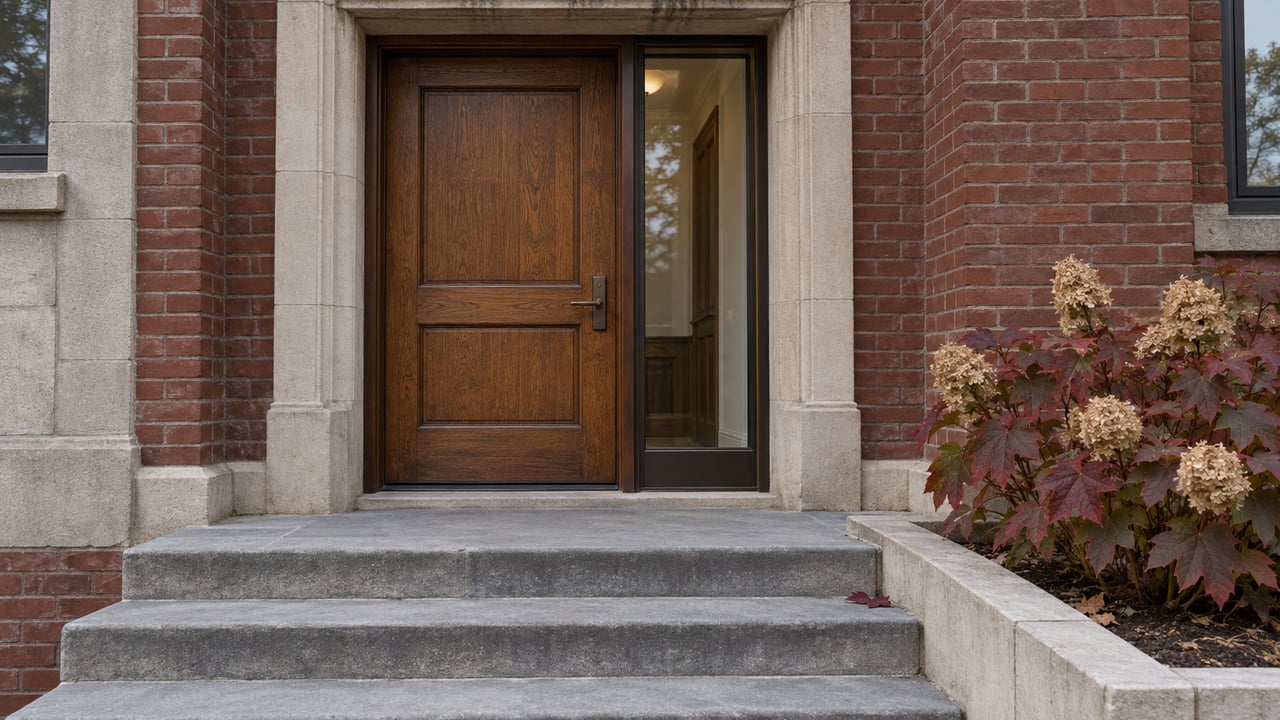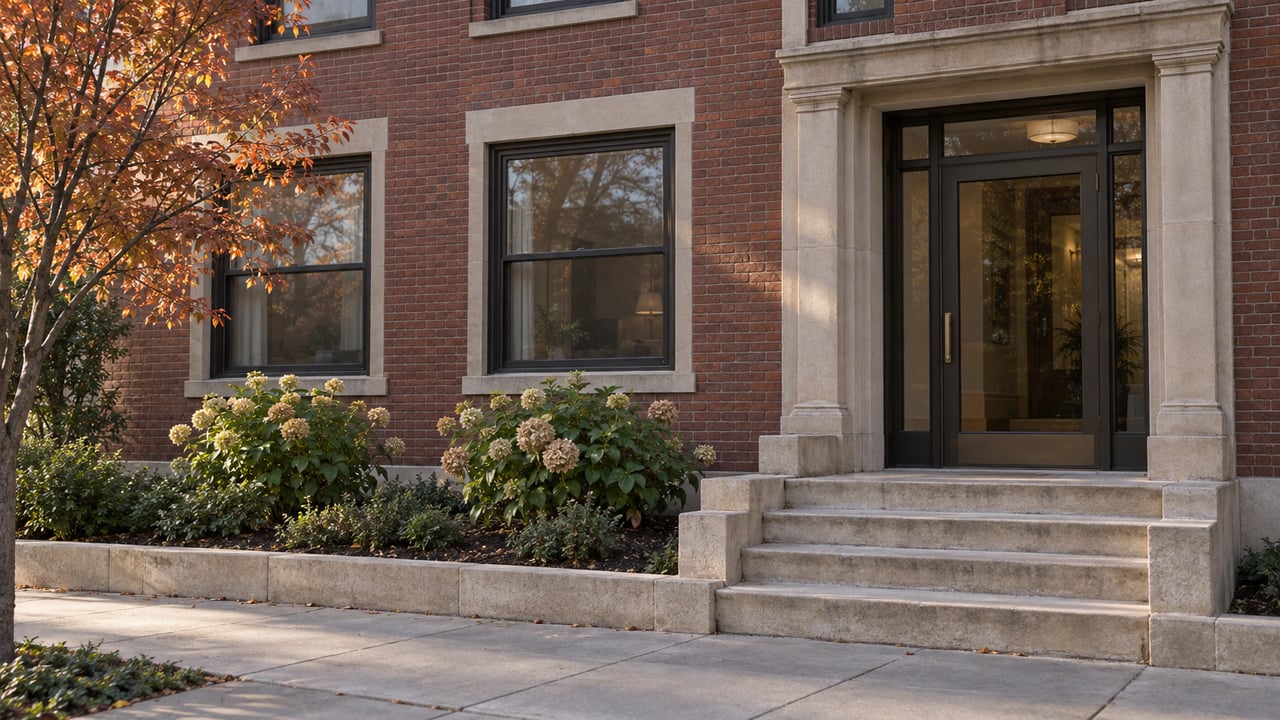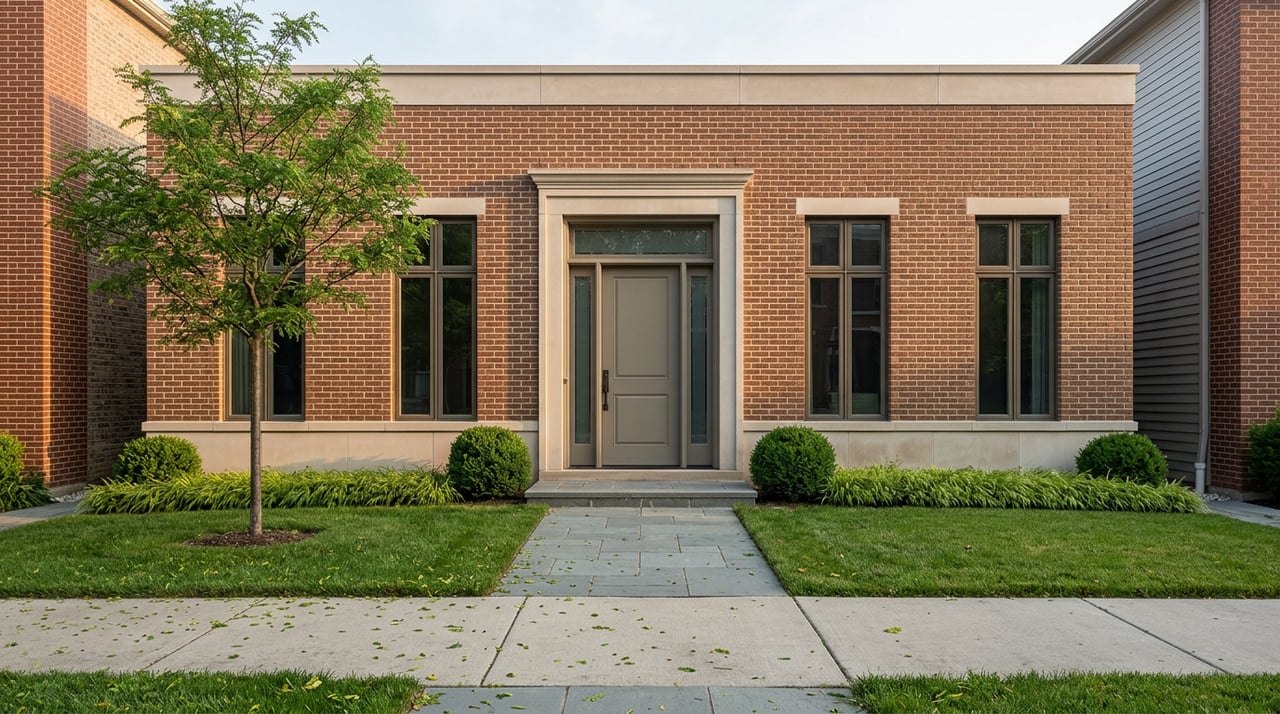
On September 10, 2026, a house that doesn't exist yet went on the market in Lincoln Park for $7.3 million. The listing at 2018 North Seminary Avenue describes seven bedrooms, nine bathrooms, and 7,200 square feet, still in the framing stage, with a brick and limestone facade and a three-car garage planned for completion by summer 2027. At $1,007 a square foot, it's the kind of number that makes headlines on its own.
But the price isn't the interesting part. What happened to that parcel in the fourteen months before the framing crew showed up tells you more about how Lincoln Park actually prices real estate than the sale figure does.
Seven Months on a City List
Before Old Head Development, the Chicago-based builder behind the project, could break ground, the lot spent most of a year tangled in city process. The property held a workers cottage from the 1890s, rated orange in the Chicago Historic Resources Survey and sitting just outside the boundary of the Armitage-Halsted Historic District. City records show it landed on Chicago's Demolition Delay Hold List in July 2025, was released for demolition that October, then released again in February 2026 before the cottage finally came down over the summer.
That back and forth traces to Chicago's Demolition Delay Ordinance, adopted in 2003, which holds up demolition permits for up to 90 days on any structure rated orange or red in the 1996 survey, giving the Department of Planning and Development a window to explore preservation options, including landmark status. The hold can be extended by mutual agreement between the city and the applicant, which is part of why a single property can bounce on and off the list for the better part of a year. Local preservationists raised objections on social media before the cottage was cleared. The delay didn't save it. It postponed it.
The lesson for anyone shopping a Lincoln Park lot with anything built before roughly 1940 standing on it: check the color rating before you assume the timeline between contract and groundbreaking is measured in weeks. A hold that opens in July can still be active the following spring.
A Median That Can't Decide What Story to Tell
Ask three different sources what a Lincoln Park home costs right now and you'll get three different neighborhoods.
| Source | What it measures | Figure | Window |
|---|---|---|---|
| Zillow's home value index | Blended, all property types | $697,553 average value, up 9.5% year over year | As of July 2026 |
| Redfin | Houses only (excludes condos) | $953,000 average house price, up 15.7% year over year | June 2026 |
| Redfin | Blended median, all homes | $885,000, up 16.4% year over year | Three months ending June 2026 |
| Market analysis reported via Baird & Warner data | Single-family only | Median near $2.5 million, up 22.5% year over year, on inventory down 51.2% | Mid-2026 |
None of these numbers is wrong. They're measuring different slices of the same zip code. Blend condos into the count and the neighborhood looks like a high six-figure market. Isolate the detached, single-family stock, the kind of property that comes attached to its own lot, and the number more than doubles while the supply of it is cut roughly in half.
That gap is the actual story. Lincoln Park's condo inventory is large enough to pull the all-property average down toward the high $600,000s to high $800,000s. Its single-family inventory is small, shrinking fast, and repricing quickly enough that a Zestimate from earlier this year is already stale. If you're comparing Lincoln Park to another neighborhood using a single median number, you're probably comparing two different housing types without realizing it.
Why 12.5 Feet Is Worth Millions
This is where the Seminary Avenue listing earns its keep as a case study rather than a curiosity.
Andrew Thurston of Meridian Real Estate, the broker representing the property, told The Real Deal what he considers the listing's actual selling point, and it isn't the square footage.
"The width of the home is kind of the biggest selling point. In the city, lot sizes are more or less standardized because of the grid system. So anything that's a little bit extra is always preferred."
A standard Chicago single-family lot runs 25 feet wide. The Seminary Avenue parcel measures 37.5 feet, which works out to a 4,687-square-foot lot, roughly 50% more street frontage than the baseline. Thurston says every time a lot like that comes on the market, five to ten buyers are already waiting for it.
The reason width specifically drives the premium, rather than total lot area, comes down to how Chicago's residential grid is built. Lot depth across most Lincoln Park blocks runs a fairly consistent 100 to 125 feet regardless of address. Width is the one dimension that varies lot to lot and can't be manufactured without buying the parcel next door. When almost every buildable site in a neighborhood is the same width, the rare one that isn't becomes the scarce input, and buyers bid accordingly.
When the Grid Won't Give You Width, You Buy It
A handful of developers have taken that logic to its extreme by combining lots outright. On Orchard Street, a newly completed house sits on four assembled parcels and is listed above $15 million, according to Crain's Chicago Business reporting from earlier this year. It follows an earlier project at 1909 North Orchard, a 100-foot-wide, four-lot assemblage marketed as a custom megahouse. A nearby estate on Burling Street closed for $15.25 million in 2024.
Run the math and the pattern holds. Four standard 25-foot lots stitched together produce 100 feet of frontage, roughly four times what Seminary Avenue's buyers are already paying a premium for at 37.5 feet. The more expensive the finished home gets in this neighborhood, the more of that price tag is really a bid on land width rather than a bid on the house sitting on top of it.
The Other Bet: Trade Width for Units
Not every Lincoln Park teardown is chasing a wider single-family lot. Some are betting the opposite direction entirely.
At 950 West Willow Street, an 1888 home came down this year and was replaced with a permitted four-unit building carrying a $950,000 construction cost. The original owner had sought a rezoning from RT-4 to RM-5 with plans to renovate the existing structure rather than demolish it. Once the developer Landex acquired the parcel in January 2026, the plan shifted to full demolition and new construction. The RM-5 designation matters because it raises the maximum floor area ratio from 1.2 to 2.0 and drops the minimum lot area required per dwelling unit from 1,000 square feet to just 400, the kind of density allowance that makes four units pencil out on a lot where a single house once stood. Charles Schwartz is listed as architect of record, Fargo Group LLC as general contractor, and the zoning review fell under Alderman Timmy Knudsen's 43rd Ward.
The permitting timeline on this one is worth noting on its own. The demolition permit was filed in March 2026 and issued in June. The new construction permit sat pending in the city's data portal from April 4 before finally issuing roughly 150 days later. No historic rating was involved here, no Demolition Delay Ordinance hold. The months-long wait was standard zoning review.
Put Seminary Avenue and Willow Street side by side and you get two developers looking at the identical scarcity, tight inventory sitting on a standardized lot grid, and drawing opposite conclusions. One is betting that width sells as luxury. The other is betting that density sells as yield. Both bets required months of patience with the permitting process before either could pour a foundation.
What This Means If You're Evaluating a Lincoln Park Lot
- Check the Chicago Historic Resources Survey color rating on any structure built before roughly 1940. Orange or red means a possible 90-day hold that the city can extend.
- Measure frontage, not just total square footage, when comparing lots. Twenty-five feet is the baseline in this neighborhood. Anything wider is being priced as a scarce input, not a bonus feature.
- Treat any single "median price" headline as a starting point, not an answer. Ask whether the figure blends condos with single-family homes or isolates one from the other.
- Build permit review time into your offer strategy in months, not weeks, whether or not a demolition delay applies.
Common Questions
How wide is a typical Chicago single-family lot? Twenty-five feet, a standard set by the city's grid layout that applies across most of Chicago's residential blocks, including Lincoln Park.
What triggers Chicago's Demolition Delay Ordinance? A building rated orange or red in the 1996 Chicago Historic Resources Survey automatically triggers a hold of up to 90 days before a demolition permit can issue, and that hold can be extended by mutual agreement between the applicant and the city's Department of Planning and Development.
Does a wider lot always mean a higher sale price? Not by itself, but paired with the current scarcity of single-family inventory in Lincoln Park, extra frontage has been drawing multiple waiting buyers for every new listing, according to brokers active in the neighborhood this year.
Whether you're weighing an offer on an existing greystone, sizing up a teardown-eligible lot, or trying to price a single-family home for sale in this market, the number that matters most rarely shows up in a headline median. If you want a second opinion grounded in what's actually closing on the ground in Lincoln Park right now, Julie Latsko offers a free home valuation and design consultation to walk through what your specific lot, block, and property type are really worth in today's market.